Not All Alar Base Reduction Surgeries Are the Same
Learn why alar base reduction is not a single procedure — lateral, medial, and central incision techniques each suit different nose shapes, explained by YourTime Plastic Surgery.

Hello,
Today, after a while, I have prepared a column about the nose.
Many clinics perform alar base reduction using only one technique.
In most cases, it seems surgeons tend to go with the method they are most comfortable with.
Did you know that there are actually several different techniques for alar base reduction, and that the right approach should be chosen based on the shape of each patient's nose?
=======================================================
1. Lateral Incision Method
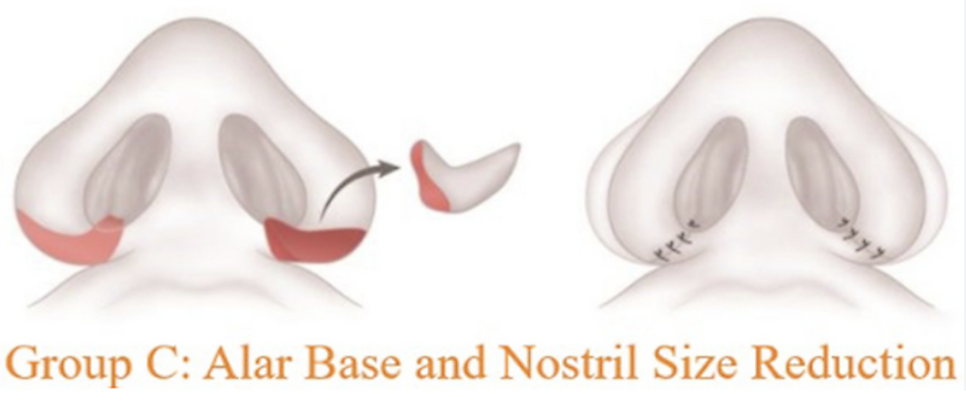
The lateral incision method allows for the greatest degree of reduction, but in Korean patients, such a large reduction is rarely necessary. Because the scar extends along the outside of the alar base and can be relatively long, this approach is generally avoided when possible nowadays.
However, if a significant reduction is needed and a definitive result is desired, the lateral incision may still be the appropriate choice.
2. Medial Incision Method – Reducing the Alar Span
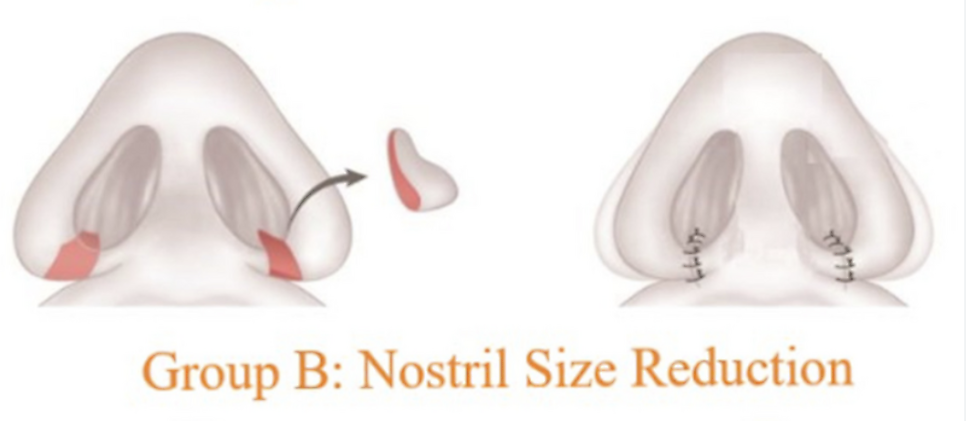
This method is widely preferred because the scars are hidden entirely inside the nostrils.
Although it may appear straightforward, the precise location and angle of tissue removal must be chosen with great care.
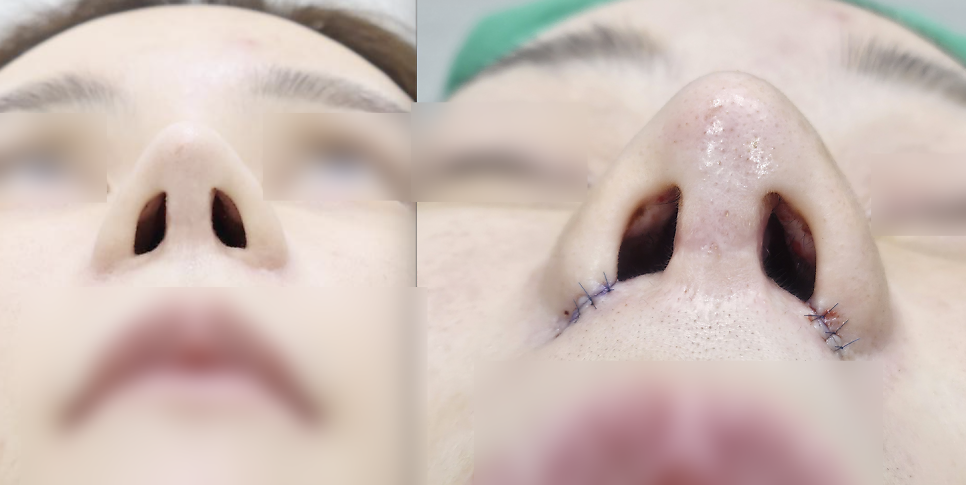
By combining a well-planned medial incision with a reduction of the alar span — the distance from one outer edge of the alar base to the other — the nose can be given a more gathered, slimmer appearance, while also creating a subtle impression of a slightly elevated nasal tip.
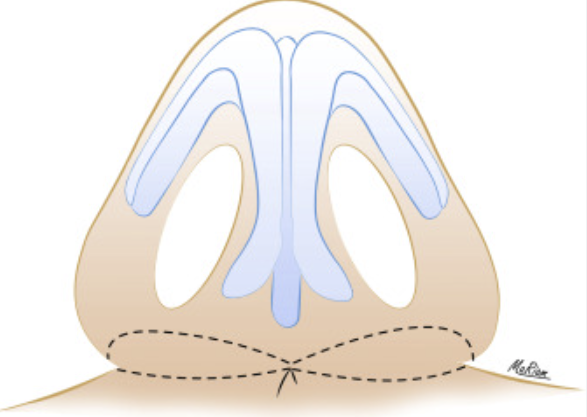
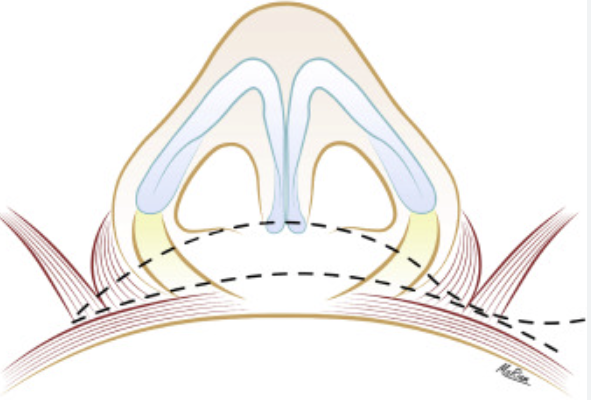
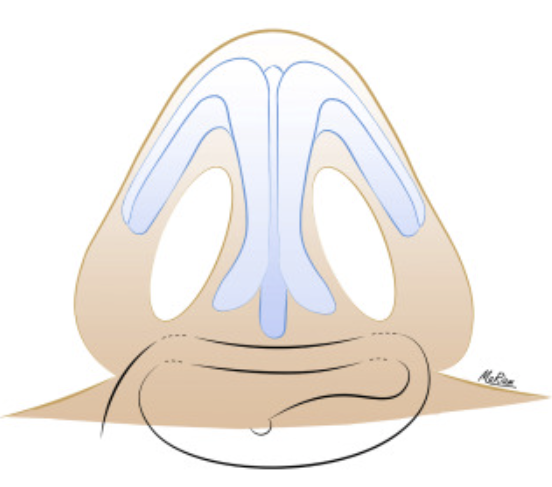
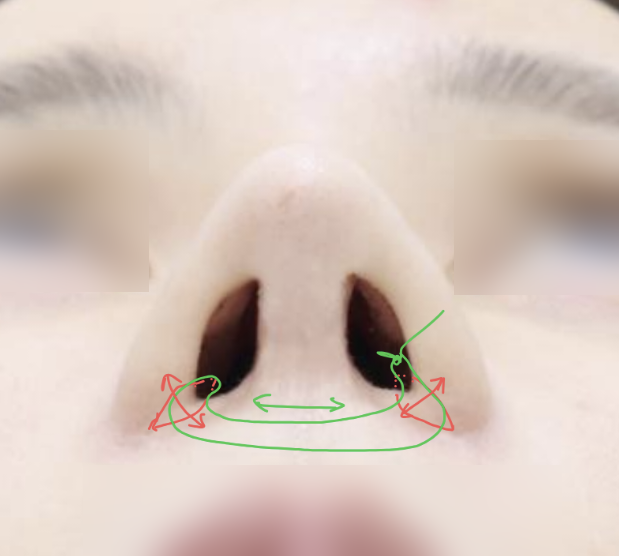
This technique, known as the "alar cinching suture," can be performed in several ways.
Personally, I primarily use the approach shown in green in the diagram.
** Red – medial incision method; Green – alar span reduction (alar cinching suture)
3. Central Incision Method
There are cases where even the above methods fall short.
These are cases where the alar lobule itself is thick and bulky, so that a lateral or medial incision would only reduce the nostril opening without adequately addressing the volume of the alar tissue.
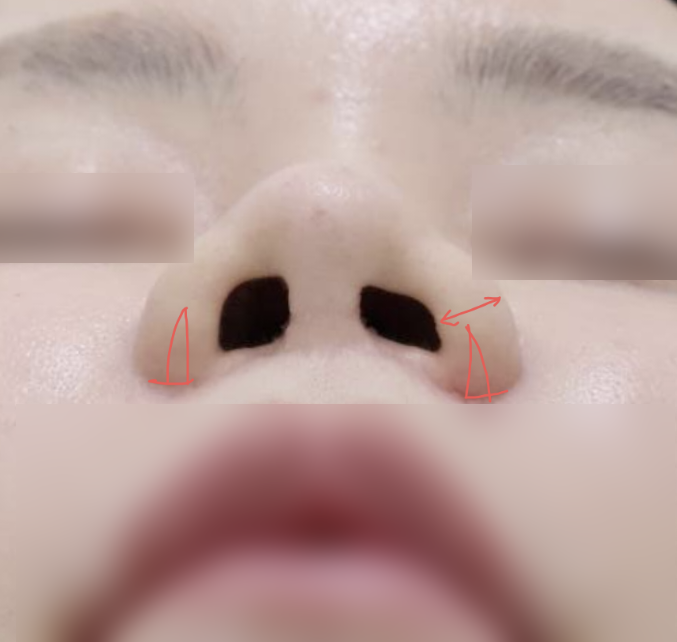
In such cases, a technique that directly excises tissue from the center of the alar lobule to reduce its volume and create a slimmer contour can be effective.
This is when the central incision method is applied.
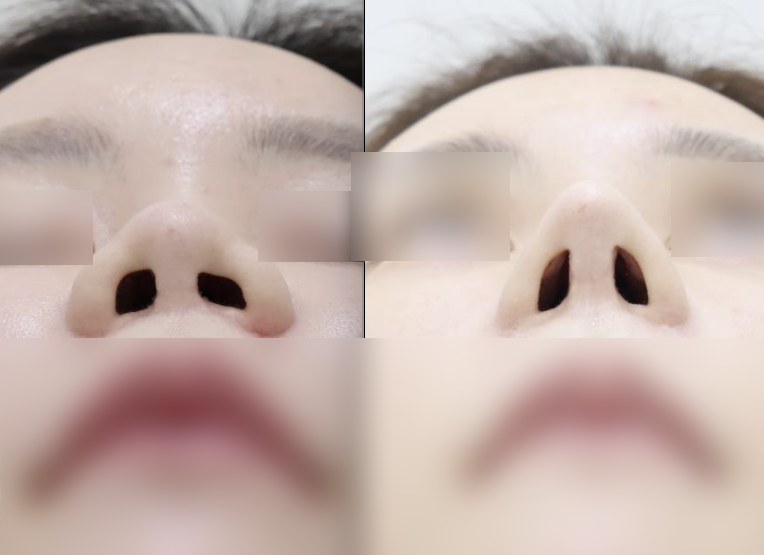
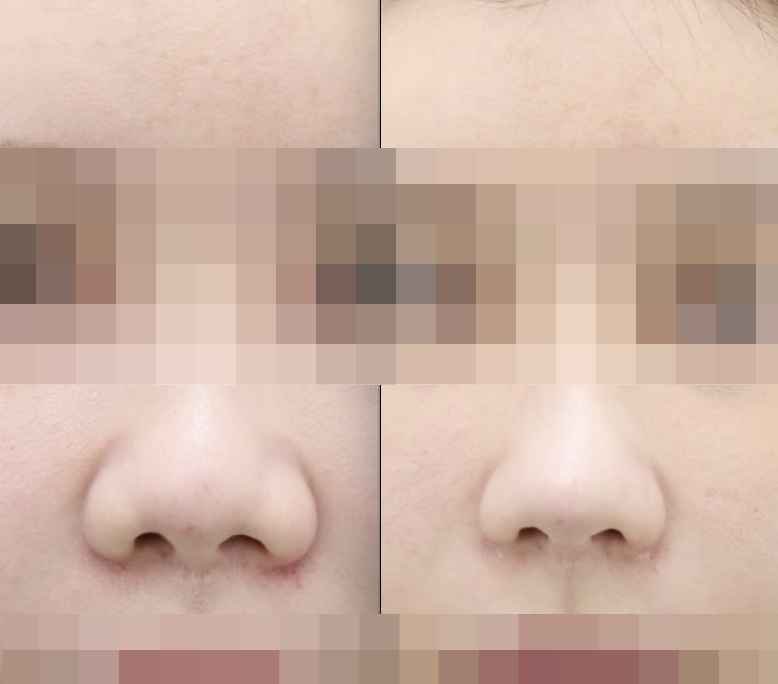
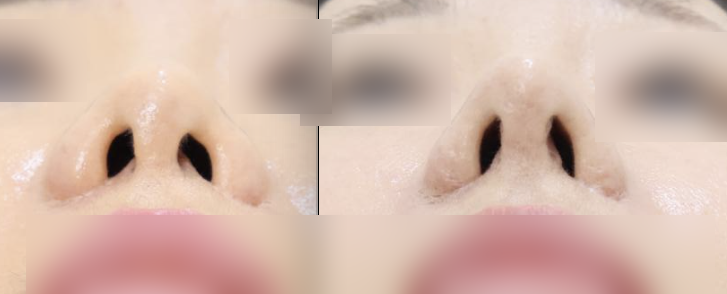
For example, patients who have already undergone three or more rhinoplasty procedures may have significantly narrowed nostrils. In these individuals, a lateral or medial incision could further reduce the nostril opening and potentially cause breathing difficulties.
Because the volume of the alar lobule itself is the primary concern in these cases, the central incision is the most appropriate technique.
=======================================================
Alar base reduction is not a single one-size-fits-all procedure — it is important to select the method that suits each individual's nose.
If surgery focuses solely on "reducing" without considering technique selection, the results may include unnecessarily poor scarring, nostrils that are simply made smaller without improving overall appearance, or a pinched-nose look.
As always, any cosmetic procedure should be discussed and decided upon with a board-certified plastic surgeon. ^^
Thank you.
YourTime Plastic Surgery
Kwak Chan-yee, Director (dedicated and detail-oriented) :D
#GangnamPlasticSurgery #YourTimePlasticSurgery #KwakChanYee #ForheadLift #ForheadReduction #ForheadLiftReduction #GangnamForheadLift #TemporalLift #MiniLift #BrowLift #BrowPtosis #HeavyEyelids #LowerEyelidLaxity #SeriousAboutSurgery #BrowBoneReduction #ForheadContouring #PlasticSurgeryFAQ #SinnonhyeonPlasticSurgery #RhinoplastyKorea #AlarBaseReduction #LateralIncision #MedialIncision