[Graphic Content Warning] Forehead Bone Reduction Surgery: The Actual Procedure (Video)
Dr. Kwak Chan-yee of YourTime Plastic Surgery explains the endoscopic forehead bone reduction procedure, including CT planning and actual surgical video footage.
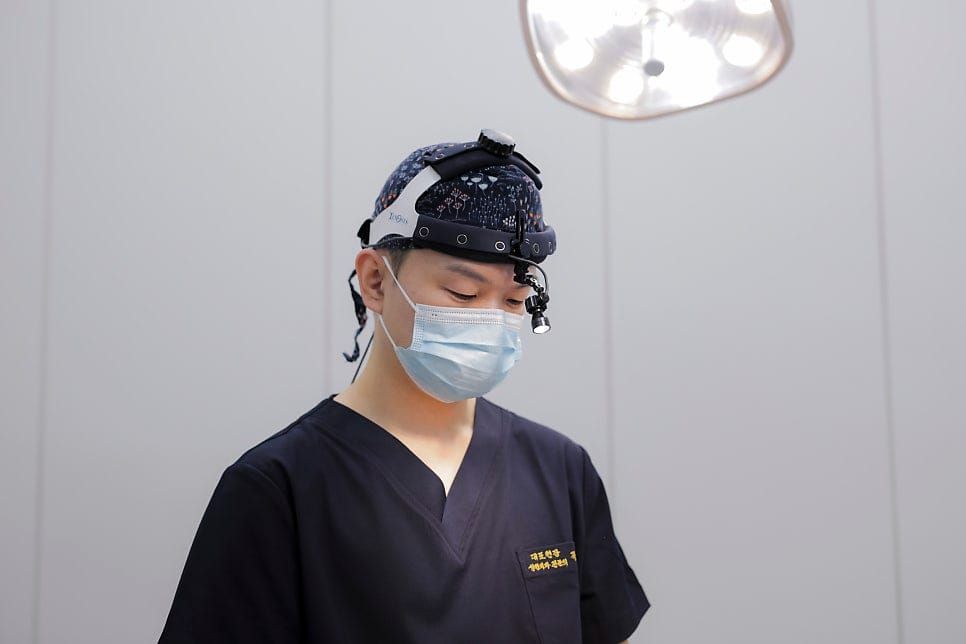
Hello, this is Dr. Kwak Chan-yee of YourTime Plastic Surgery.
Someone asked (perhaps jokingly) how the bone is actually shaved down with an endoscope during forehead surgery, so…
In case anyone is genuinely curious, I'm carefully sharing actual surgical footage today.
==============================================================
** Today's post contains real surgical video footage.
If you have a weak stomach, please press the back button. **
==============================================================
I have written about forehead bone reduction on this blog once before:
https://blog.naver.com/yourtimeps/224345060612
Just below the forehead bone above the eyebrows, there is a protruding ridge where the eyebrow and the corrugator supercilii muscle attach.
This area is called the brow ridge, and the procedure of grinding down or cutting away this protruding bone is referred to as forehead (brow) bone reduction.
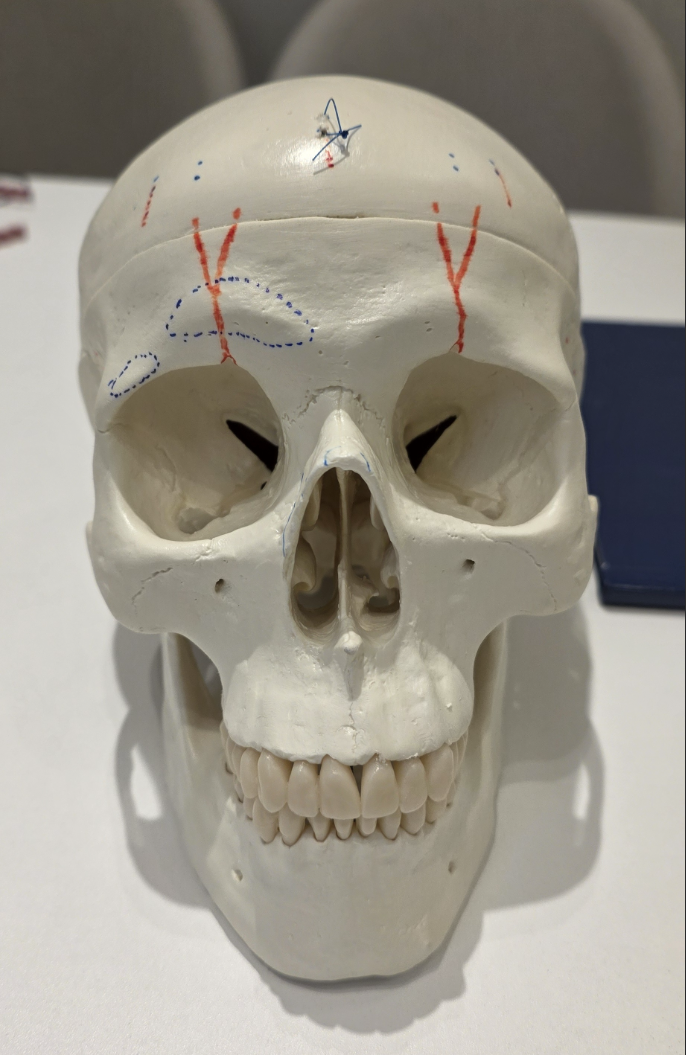
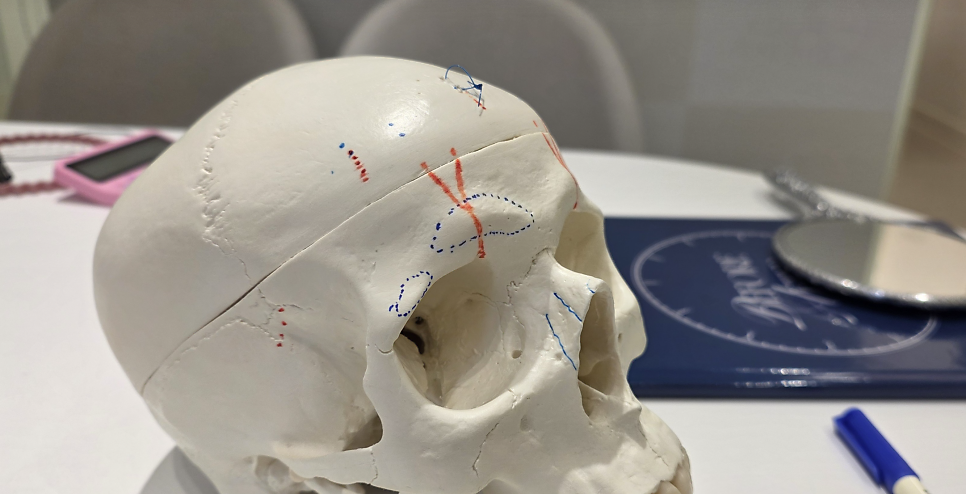
Reducing or removing this area can soften a facial impression that appears stubborn, fierce, or strong, giving it a gentler and softer look.
It also reduces the shadow cast over the eyelids and eye corners by the protruding bone, making the eye area appear brighter and less heavy.
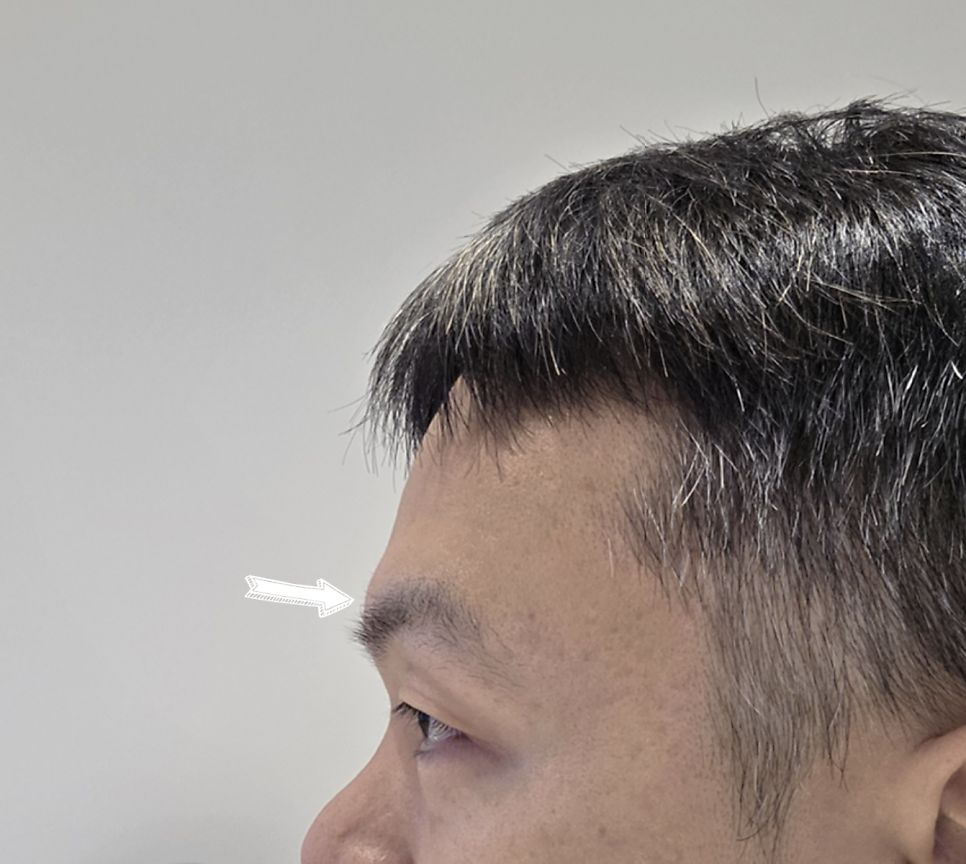
(This is actually a photo of me.) I myself have a somewhat prominent brow ridge.
For patients with this characteristic who are undergoing a forehead lift and also wish to change their overall facial impression, forehead bone reduction can be performed alongside the lift to achieve a softer appearance.
When performing bone reduction endoscopically, a clear surgical field is paramount, which means bloodless, clean dissection is critically important.
Confirming the location of the frontal sinus and bone thickness via CT scan is also an essential step.
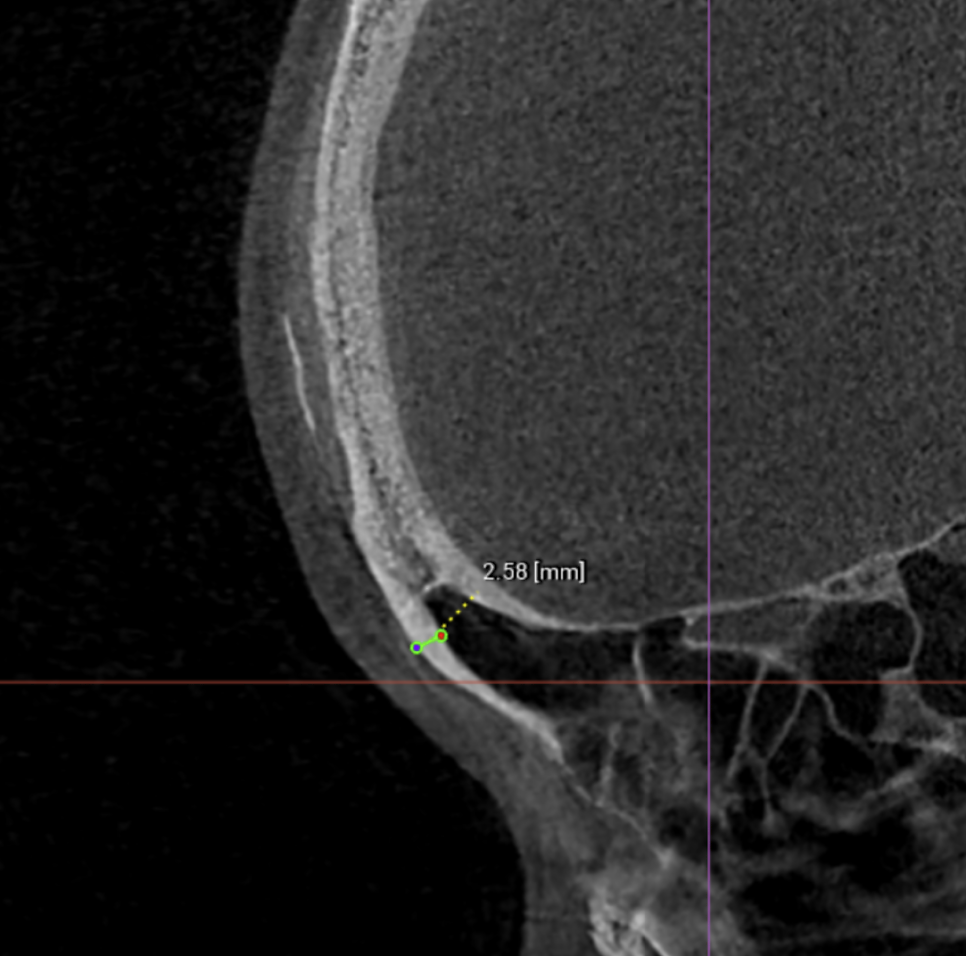
For example, in this patient's case, the thickness of the forehead bone at the brow ridge was approximately 2.58 mm.
(This patient had a CT scan taken to evaluate a forehead implant.)
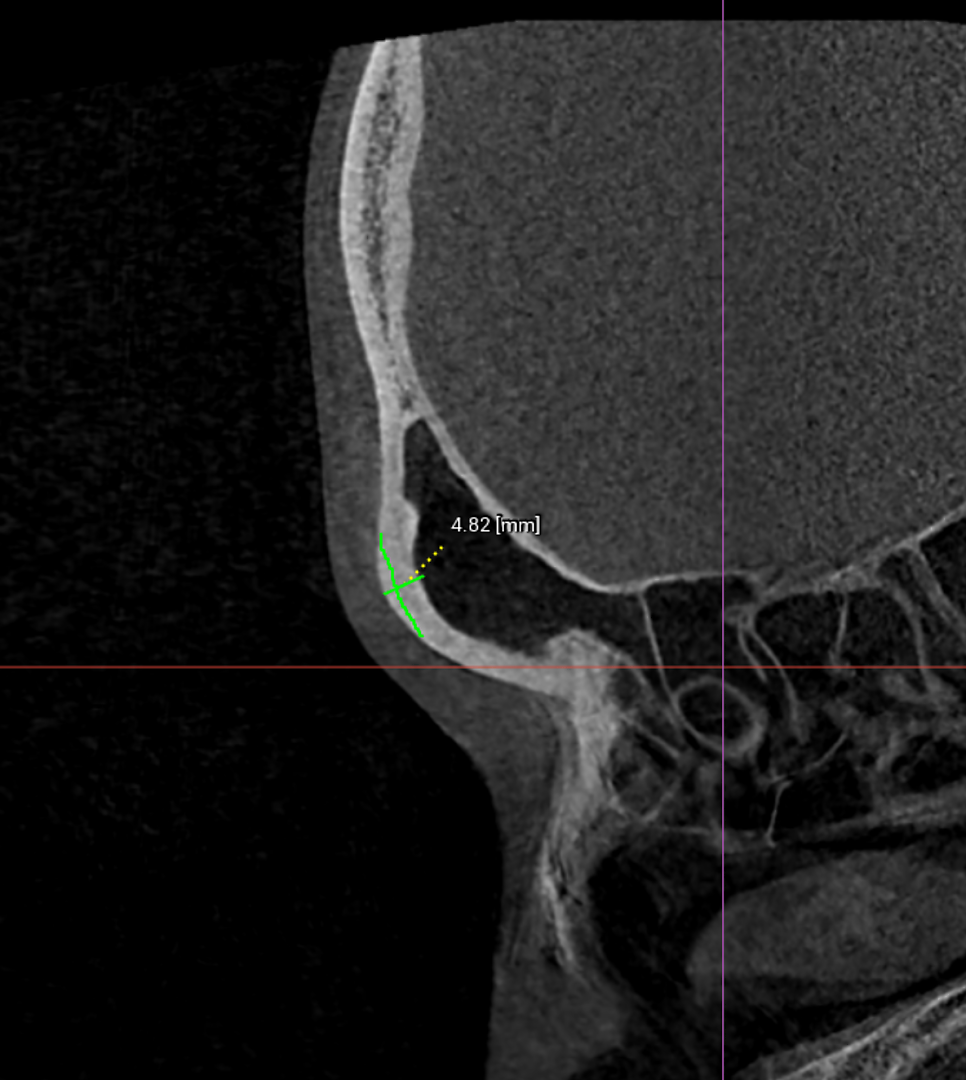
In today's case, the patient's forehead bone thickness at the brow ridge is approximately 4.82 mm.
This means we can safely reduce the bone by approximately 3 mm without entering the frontal sinus.
This procedure is safer than many people expect.
For patients who want to change the impression created by specific protrusions — such as a prominent brow ridge or lateral orbital rim — the results can be quite dramatic.
Let's watch the actual footage together.
** The following contains real surgical video footage.
If you have a weak stomach, please press the back button. **
The video is a bit long.
Afterward, there is an additional step in which the surface is smoothed down by another 1–2 mm.
The key takeaways are:
1. Confirm the exact location of the frontal sinus and bone thickness via CT scan beforehand.
2. When complete, bloodless dissection is achieved and the procedure is performed by an experienced surgeon,
this is a bone surgery that can deliver genuinely safe and dramatic results.
Men most commonly seek reduction of the brow ridge prominence, while women more often address lateral orbital rim protrusion. (This is especially true for middle-aged and older women with enophthalmos.)
For decisions about surgery that are tailored specifically to your own anatomy, it is important to have an in-depth conversation with a board-certified plastic surgeon to find the right direction for you.
Thank you.
Dr. Kwak Chan-yee, YourTime Plastic Surgery