Hairline Lowering Surgery vs. Hair Transplant: Pros and Cons Compared
Comparing hairline lowering surgery and hair transplantation? YourTime Plastic Surgery director Kwak Chan-yee breaks down the pros and cons of each procedure to help you choose.

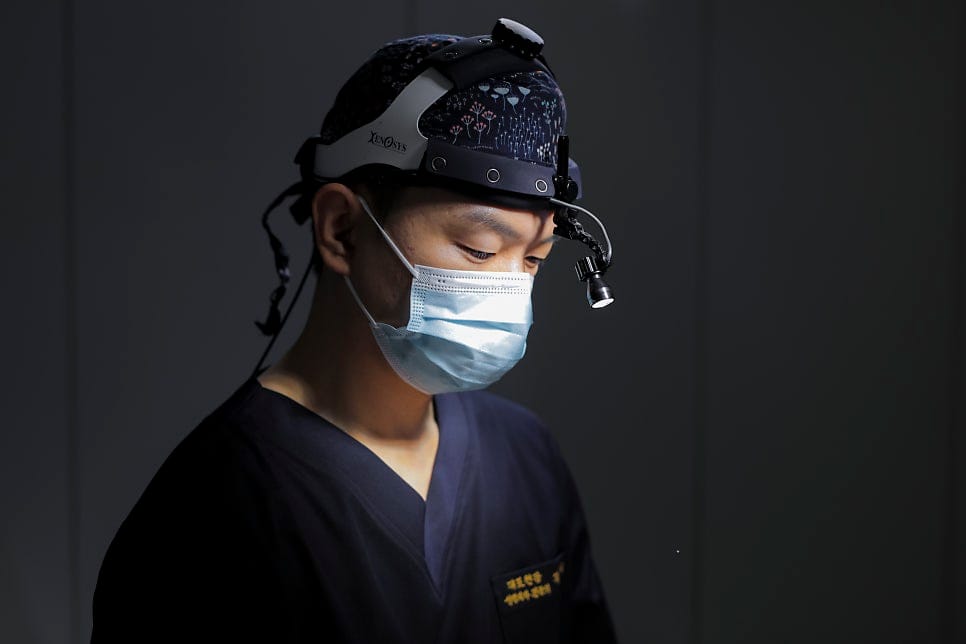
Hello, I'm Kwak Chan-yee, Director of YourTime Plastic Surgery.
As I perform more and more hairline lowering procedures, I frequently meet patients who are weighing hairline lowering surgery against hair transplantation — asking about the differences or wondering whether a hair transplant might be the better choice.
I decided to compile everything I usually explain to patients before surgery into one blog post.
Here it is: Hairline Lowering Surgery vs. Hair Transplant — Pros and Cons.
=======================================================
<< Where Hairline Lowering Surgery Has the Advantage >>
1. A hair transplant is not a knife-free procedure either.
Many patients hesitate about hairline lowering surgery because they picture a long scar and a major operation. However, a hair transplant also requires incisions at the donor site on the back of the head. Even with a non-strip (FUE) technique, wound dressing of the donor area is often necessary, and the harvested follicles mean less hair density at the back of the head. Concerns about thinning in the occipital donor region have been coming up more and more frequently in online communities, which reflects how much attention is now being paid to donor-site outcomes.
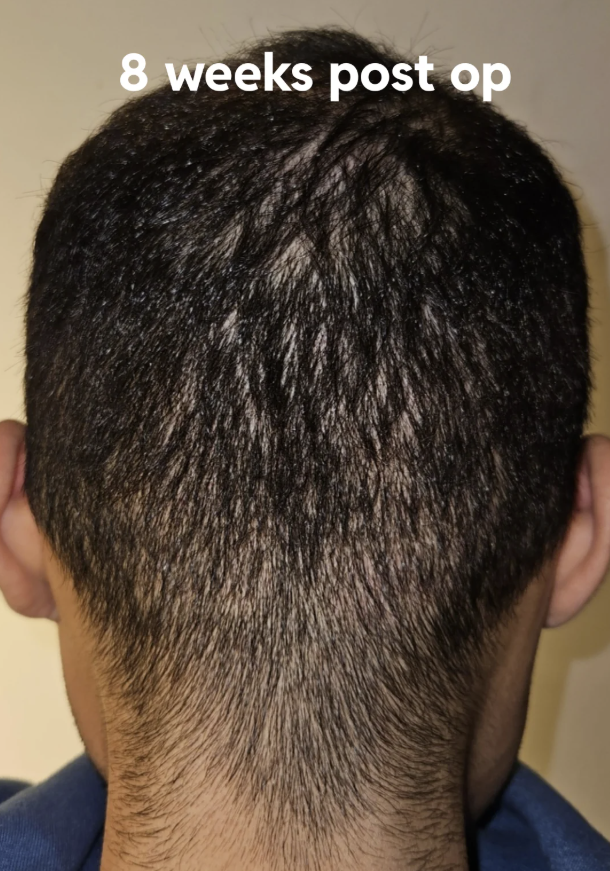
2. A hair transplant takes longer — typically five hours or more.
For a standard transplant of around 3,000–5,000 grafts, the entire process — preparation, harvesting, graft dissection, and implantation — takes approximately five hours. Hairline lowering surgery, even when combined with a brow lift, is typically completed in about two hours. Beyond the difference in operating time itself, there is also the practical impact of spending half a day versus an entire day in the clinic, not to mention the extended anesthesia and medication use that a longer procedure requires.
3. Full results from a hair transplant take about six months (see photo: Season 16 participant Gwang-su)
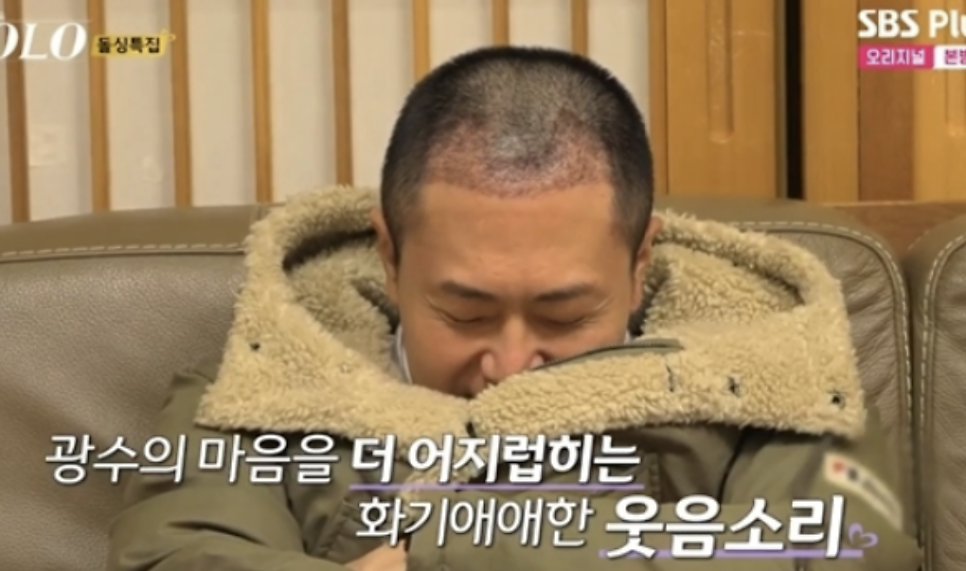
A participant on the popular TV program 'I Am Solo' appeared on the show shortly after undergoing a hair transplant. As many people know, transplanted hair does not immediately look full and dense. The implanted hairs shed soon after surgery, and new hairs grow from those follicles — a cycle that typically takes six to eight months before a noticeably fuller result appears. As a result, many patients restrict their public activities for at least six months after a hair transplant. With hairline lowering surgery, patients do worry about the scar, but in many cases it is not conspicuous once bangs are styled over it after suture removal, and recovery to daily life is comparatively faster.
4. The graft survival (take) rate for transplanted hair is not 100%.
This is also widely known: even if 3,000 grafts are transplanted, not all of them will necessarily survive and grow. Many clinics claim a survival rate above 90%, but individual variables such as scalp health, blood circulation, and age play a significant role, and actual survival rates often fall somewhat short of that figure. Hairline lowering surgery is not subject to graft survival variability, since the patient's own existing hairline is simply advanced downward — which is one of its clear advantages.
5. Texture difference: advancing the existing hairline vs. filling in with transplanted grafts.
Following on from point 4, there is a subtle difference in appearance and texture between lowering a patient's natural hairline to cover a wider forehead and filling that area with transplanted grafts. Those who have had a hair transplant often display a characteristic hairline pattern that experienced observers can recognize. In my view, the more natural result is generally achieved by working with the patient's own existing hairline.
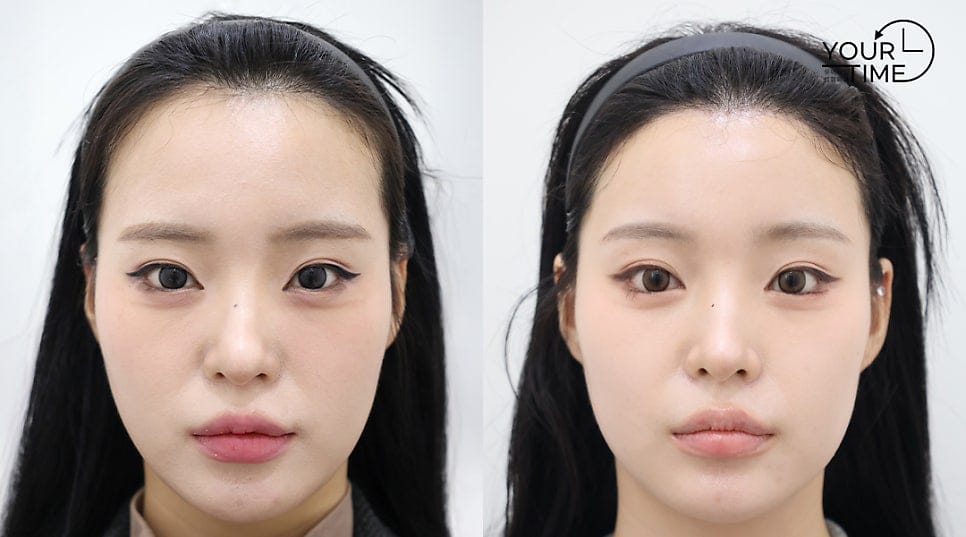
6. Cost: covering 1.5–2 cm requires roughly 3,000 grafts at around ₩5 million — hairline lowering surgery is considerably less expensive.

Cost is always a factor. Covering approximately 1.5–2 cm of the front hairline typically requires around 3,000 grafts; in the Gangnam area, prices vary widely, but ₩5 million is a common ballpark figure. Even when combined with a brow lift, hairline lowering surgery is significantly more affordable — another practical advantage.
7. Hairline lowering surgery can be combined with a brow lift.
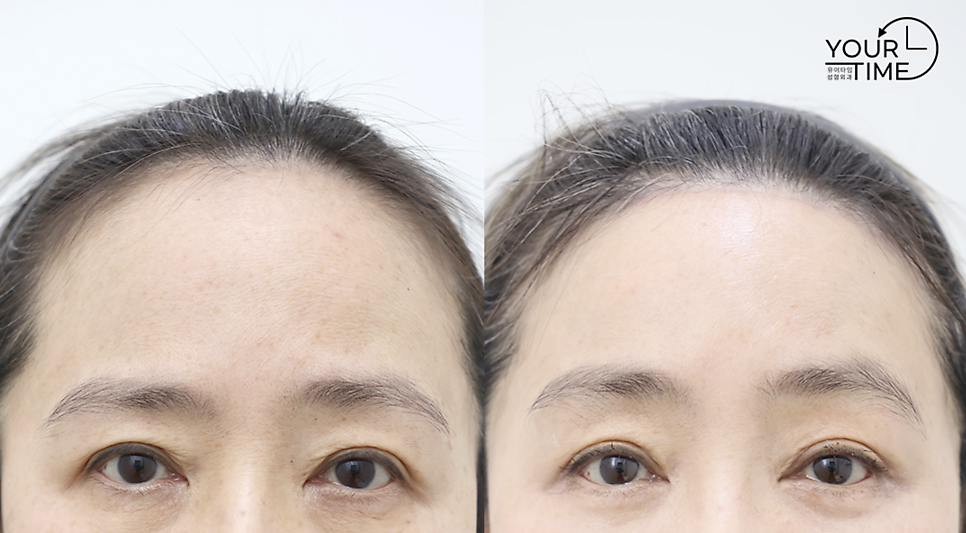
With age, the outer corners of the eyes, the glabella, and the upper eyelids can droop, and hooding of the double eyelid fold may develop — all classic indications for a brow lift. For patients who have already decided on hairline lowering surgery for a wide forehead, a brow lift can be performed at the same time. Combining the two procedures leaves only a single incision line, so no additional brow-lift scar is created, and the patient gains both an improved hairline and a more refreshed eye area in one operation.
=======================================================
Because I perform a large number of forehead procedures, I may have made hairline lowering surgery sound like the unconditional winner — but if that were truly the case, why would anyone choose a hair transplant? ^^;
There are situations where a hair transplant is the better option.
<< Where Hair Transplantation Has the Advantage >>
1. M-shaped (bitemporal) hairline recession is better addressed with a hair transplant.
Hairline lowering surgery works by excising a strip of skin and suturing the upper and lower edges together. Because the head is curved, a meaningful amount of tissue can be resected at the central forehead, but toward the lateral ends, aggressive resection risks skin puckering or insufficient flap advancement. In cases of M-shaped recession where the temples require significant coverage, a hair transplant is therefore the more suitable approach.
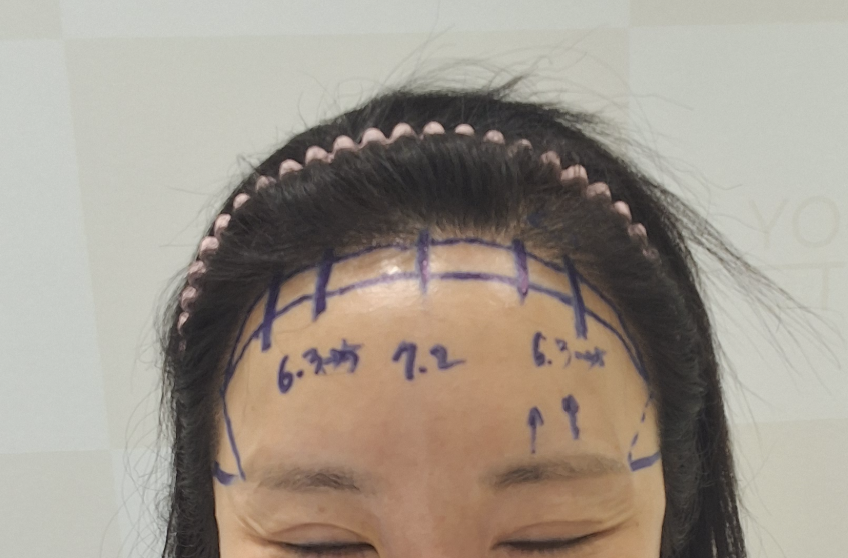
2. When the forehead is wide horizontally but short vertically, a hair transplant is also far better suited to filling in the lateral areas.

As I have mentioned previously, when the forehead is wider horizontally than it is tall vertically, a hair transplant may be more appropriate than hairline lowering surgery. The logic is the same as point 1: hairline lowering surgery primarily reduces the vertical height of the forehead, and pulling the lateral edges inward is technically difficult. If the vertical height of a forehead like the one shown above were shortened further, the result would be a forehead that is disproportionately wide and flat — an unflattering ratio. In such cases, transplanting hair to both temporal sides would be the better choice for creating a visually narrower forehead.
3. If scarring from hairline lowering surgery is a concern, adding a hair transplant afterward is also an option.
Many patients want hairline lowering surgery but are hesitant because of the scar. Here, too, a hair transplant can be useful. Scarring is admittedly a weak point of hairline lowering surgery. However, it is worth considering that after hairline lowering surgery, any areas that need additional coverage can be supplemented with grafts, or grafts can be placed directly over the scar line to conceal it effectively.
=======================================================
There is no such thing as an absolutely perfect procedure. Every surgery comes with its own trade-offs. That said, hairline lowering surgery offers more advantages than many patients initially expect.
If a wide forehead is your concern, I hope this comparison of the pros and cons of hair transplantation and hairline lowering surgery helps you make a well-informed decision.
Thank you.
YourTime Plastic Surgery
Kwak Chan-yee, Director (diligent and detail-oriented) :D
#Gangnam plastic surgery #YourTime Plastic Surgery #Director Kwak Chan-yee #brow lift #hairline lowering surgery #hairline lowering and brow lift #Gangnam brow lift #brow lift specialist #temporal lift #mini lift #eyebrow lift #drooping eyebrow surgery #heavy eyelids #sagging eye area #under-eye laxity #dedicated to surgery #brow bone reduction #forehead surgery #plastic surgery FAQ #forehead lift self-checklist #do I need forehead surgery #forehead surgery indications #hair transplant #hair transplant vs hairline lowering